The Oshpitzin Jewish Museum
Oświęcim, the Chewra Lomdei Mishnayot synagogue
Site 12 of 12
In the programmes
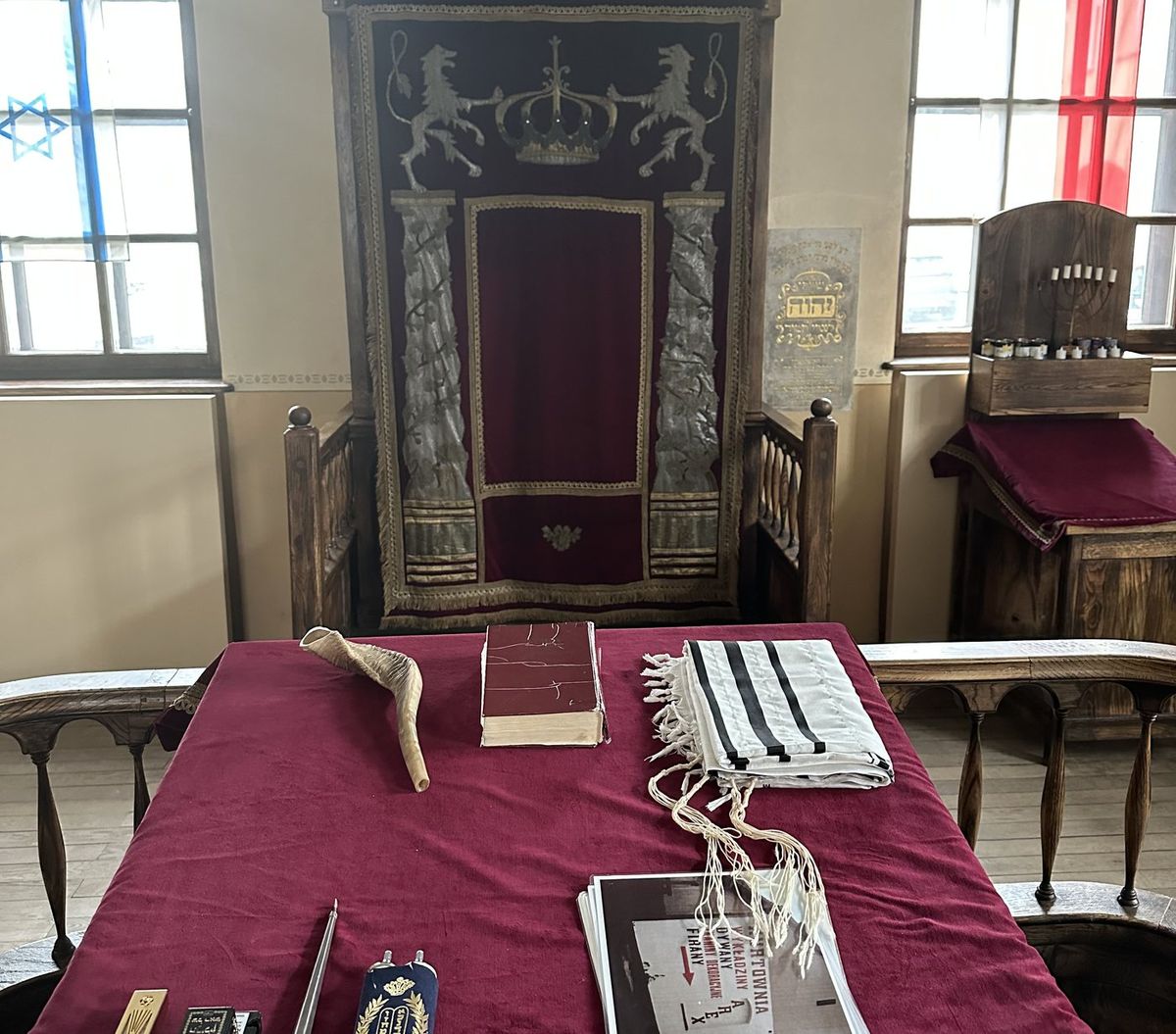
Four hundred years of a town that existed long before the camp. The last Jewish resident of Oświęcim died in 2000.
Oshpitzin is the Yiddish name of Oświęcim and for centuries it was in common use. Before the war Jews made up more than half the population of the town. There were synagogues, cheders, shops, workshops, newspapers and associations here, and the community's roots reached back to the sixteenth century.
In September 1939 the Germans burned down the great synagogue, and in 1941 they deported the Jews of Oświęcim to the ghettos in Bedzin, Sosnowiec and Chrzanow. After the war some survivors came back to the town and tried to rebuild Jewish life. Over the following years most of them left. Szymon Kluger, the last Jewish resident of Oświęcim, died in 2000; his house stands next to the museum.
The museum operates beside the surviving Chewra Lomdei Mishnayot synagogue, the only one left in the town. It is the only place in the area that tells what was here before, and it is a reminder of something fundamental: the camp did not appear in a void, but in a town that had a life of its own and that had that life taken from it.
Photo: Auschwitz Subcamps. Our own description, based on field documentation, on material of the Auschwitz-Birkenau State Museum in Oświęcim and on historical studies.
Auschwitz Subcamps is a brand of KrakowOmnia sp. z o.o.
ul. Rakowicka 10B/4, 31-511 Kraków, Poland · KRS 0001046320 · VAT PL6751785068 · operations: AllInKrakow
© 2026 KrakowOmnia sp. z o.o. The texts and photographs are ours. Terms of use