Dozens of places. Thousands of human lives. One vast system of terror and slave labour.
Beyond the best known gates lies a history that most visitors never learn. We reach the forgotten subcamps and the places normally closed to visitors, restoring the memory of the people and the events that the main story of Auschwitz leaves out.
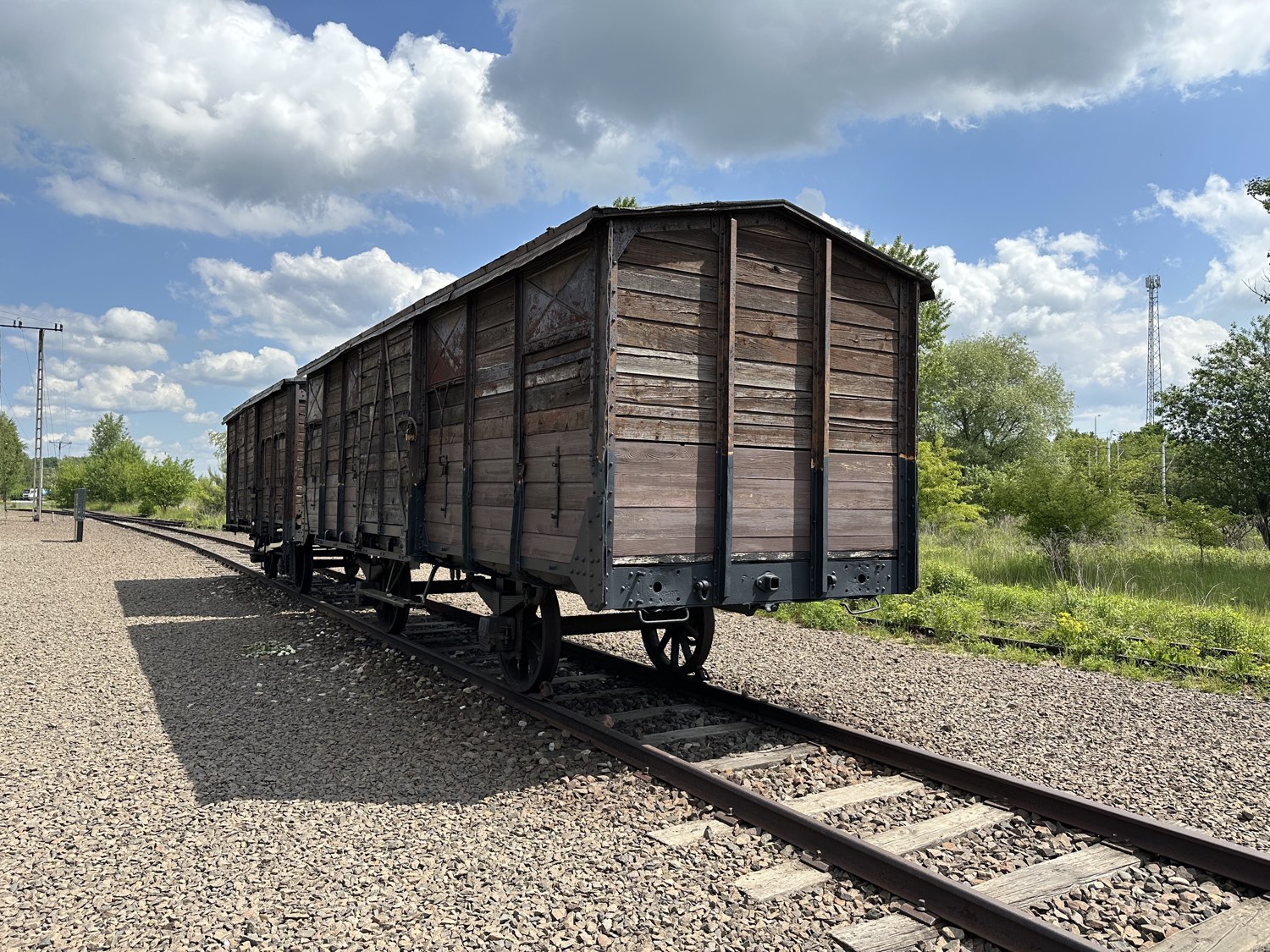
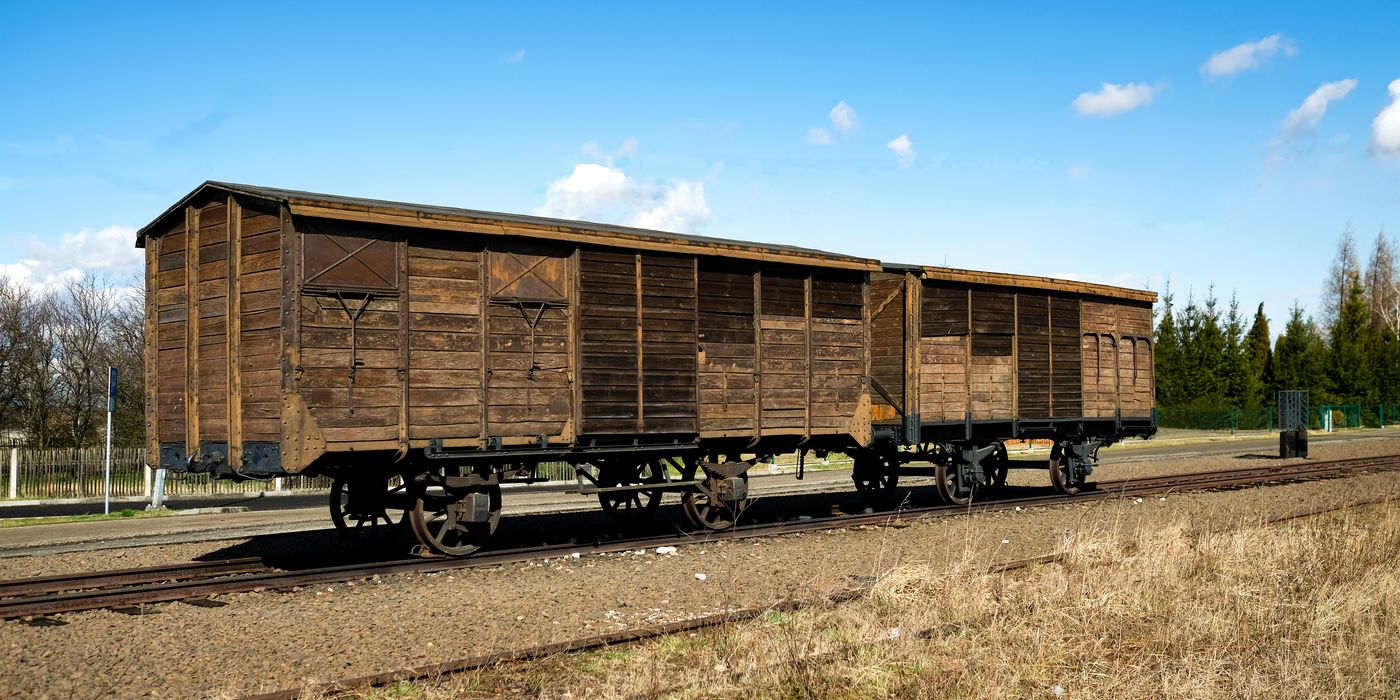
The Judenrampe. A historic freight wagon on the ramp where transports from all over Europe were unloaded from 1942 to the middle of 1944. Photo: Auschwitz Subcamps.
The Zone of Interest was forty square kilometres that the Germans emptied of their inhabitants around
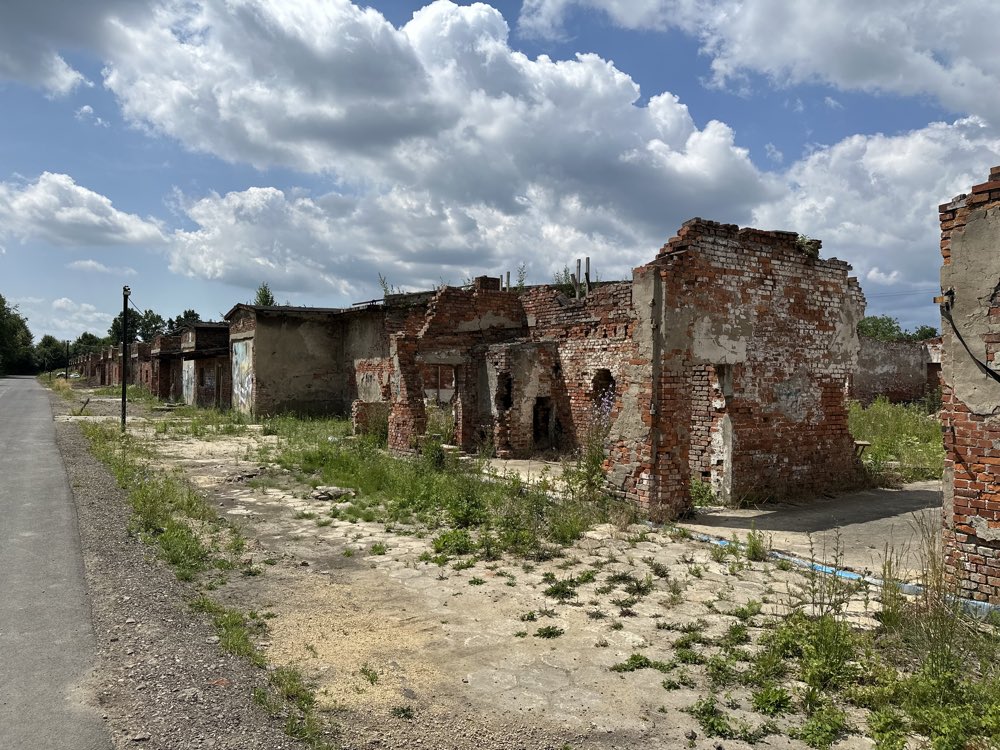
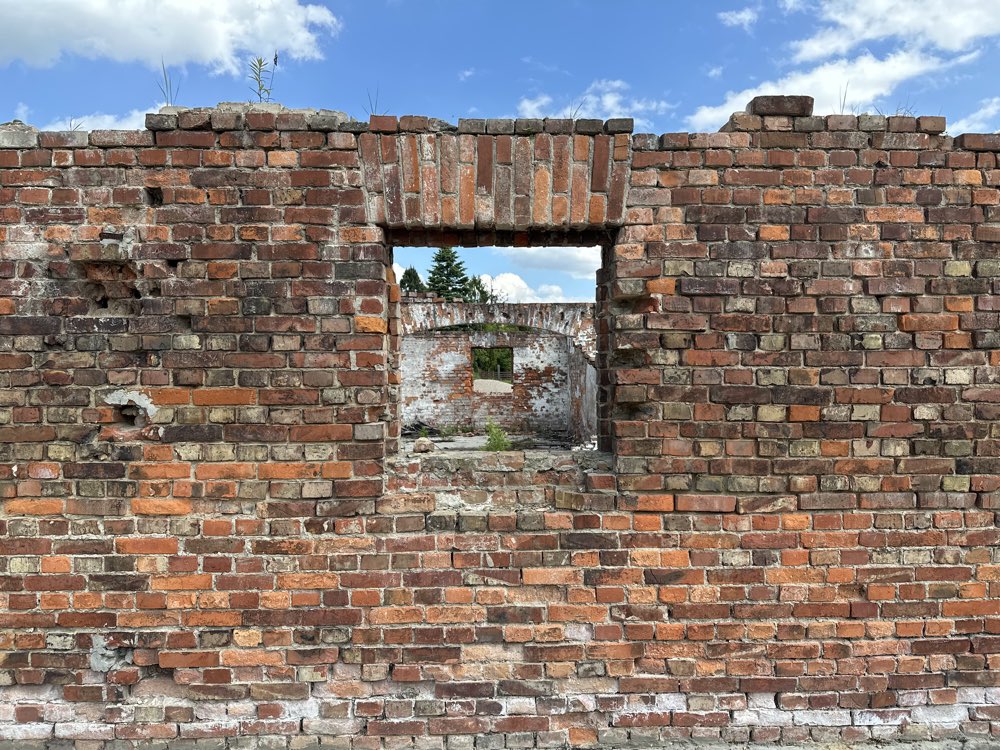
Auschwitz and Birkenau. Beyond it, across Upper Silesia, a network of subcamps grew up at mines, steelworks and factories. Traces of many of those places have survived to this day, mostly with no plaque
and no visitors. You have to go there to understand how that system
worked, and to honour the people who worked and died in it.
The railway ramp between Auschwitz I and Birkenau. From 1942 to the middle of 1944 transports from all over Europe were unloaded here, and the selections were carried out at this ramp rather than at the famous gate. A historic freight wagon of the period stands on the track. It lies five hundred metres in a straight line from the Birkenau gate and a kilometre and a half from Auschwitz I, and even so it stays off the route walked every year by more than a million visitors. Every one of our programmes begins here.
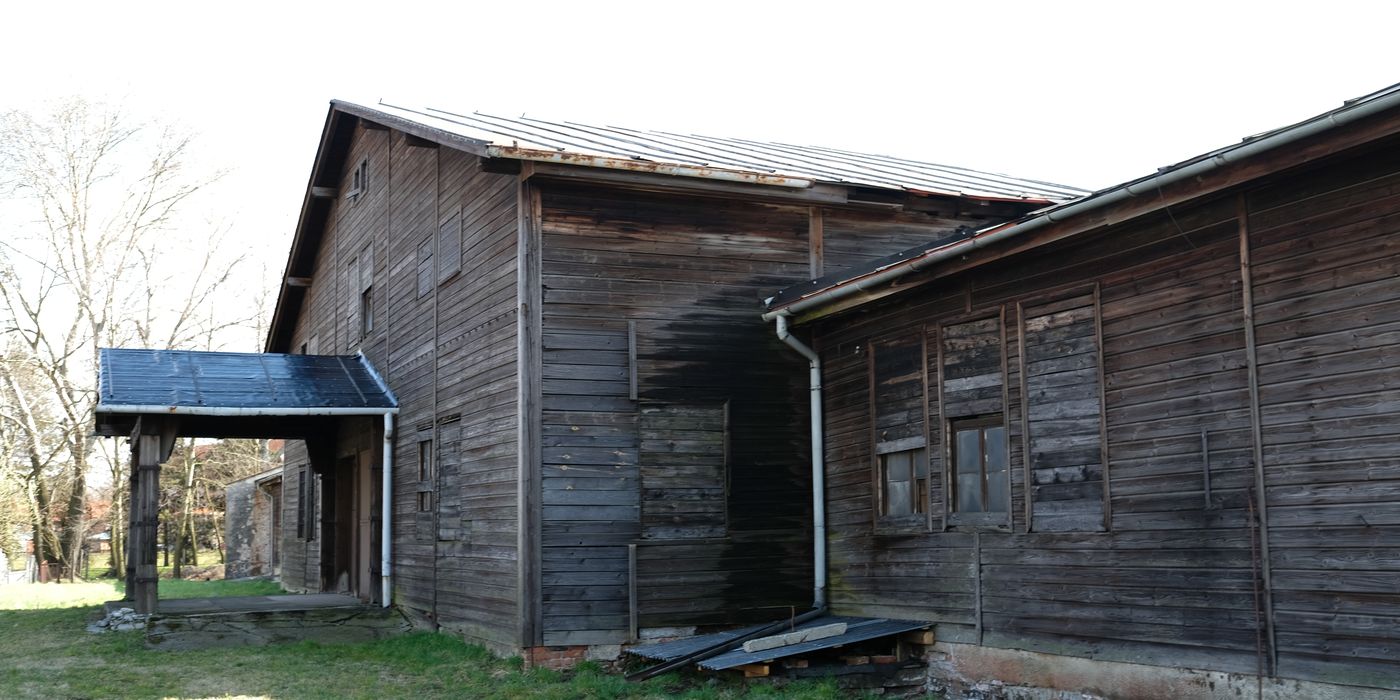
Vast food storage halls right beside the ramp, in German the Kartoffellagerhalle. The whole complex was supplied from here: the main camp, Birkenau and the subcamps. This place shows something you cannot see from behind the museum fence. Auschwitz was also an enterprise, with deliveries, storekeepers, quotas and bookkeeping, and the prisoners' rations were a line in those books, set from above, below the level that allowed survival.
The plant where cabbage and vegetables were pickled for the camp. Women prisoners worked here at huge concrete vats, many hours a day, in water and in the cold. In the camp paperwork this counted as light labour; in reality it destroyed them. We walk between the surviving buildings and show what stood where.
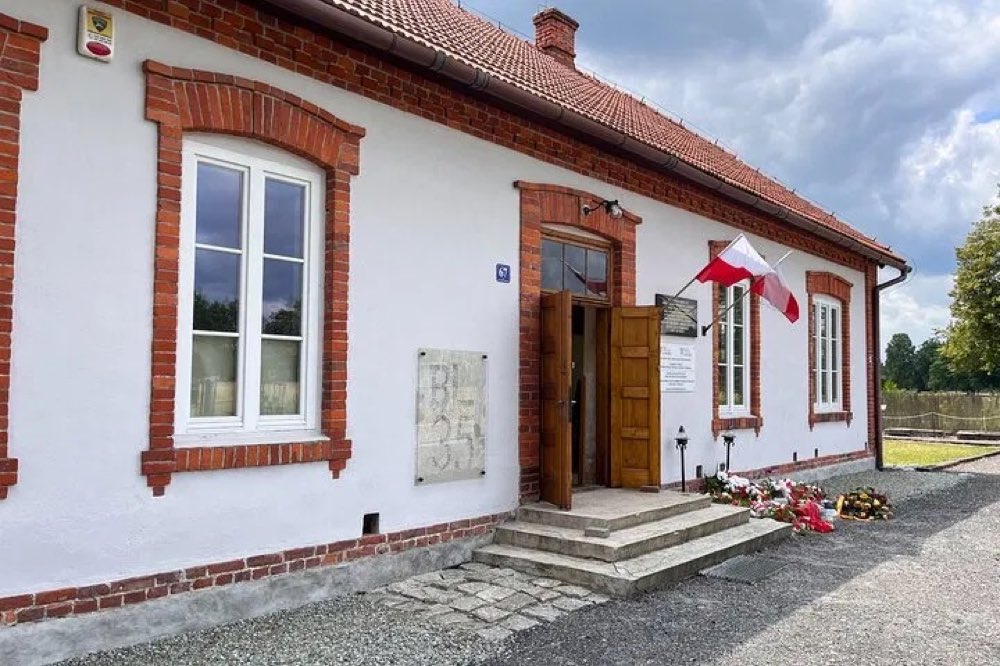
In June 1942, after one of the prisoners escaped, the Germans imposed collective responsibility and turned the detachment into a women's penal company. In the autumn of 1942 a crime took place here that almost nobody outside the specialist literature has heard of, and that ranks among the bloodiest in the whole history of the camp. The surviving building, with a small exhibition, stands alone in a field, away from any tourist route.
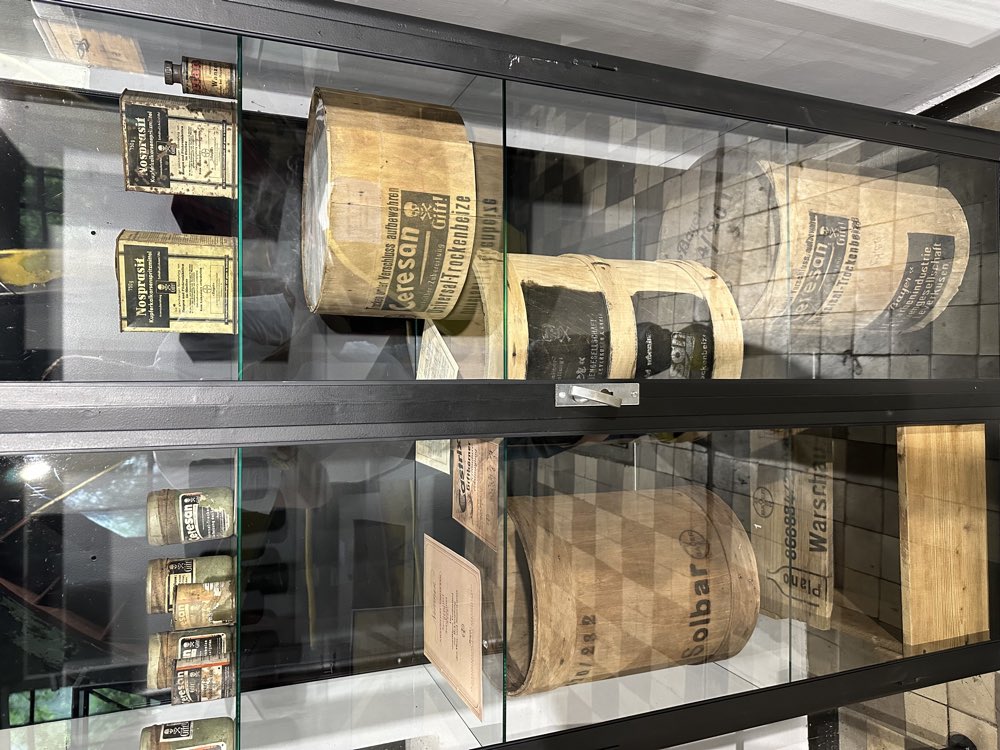
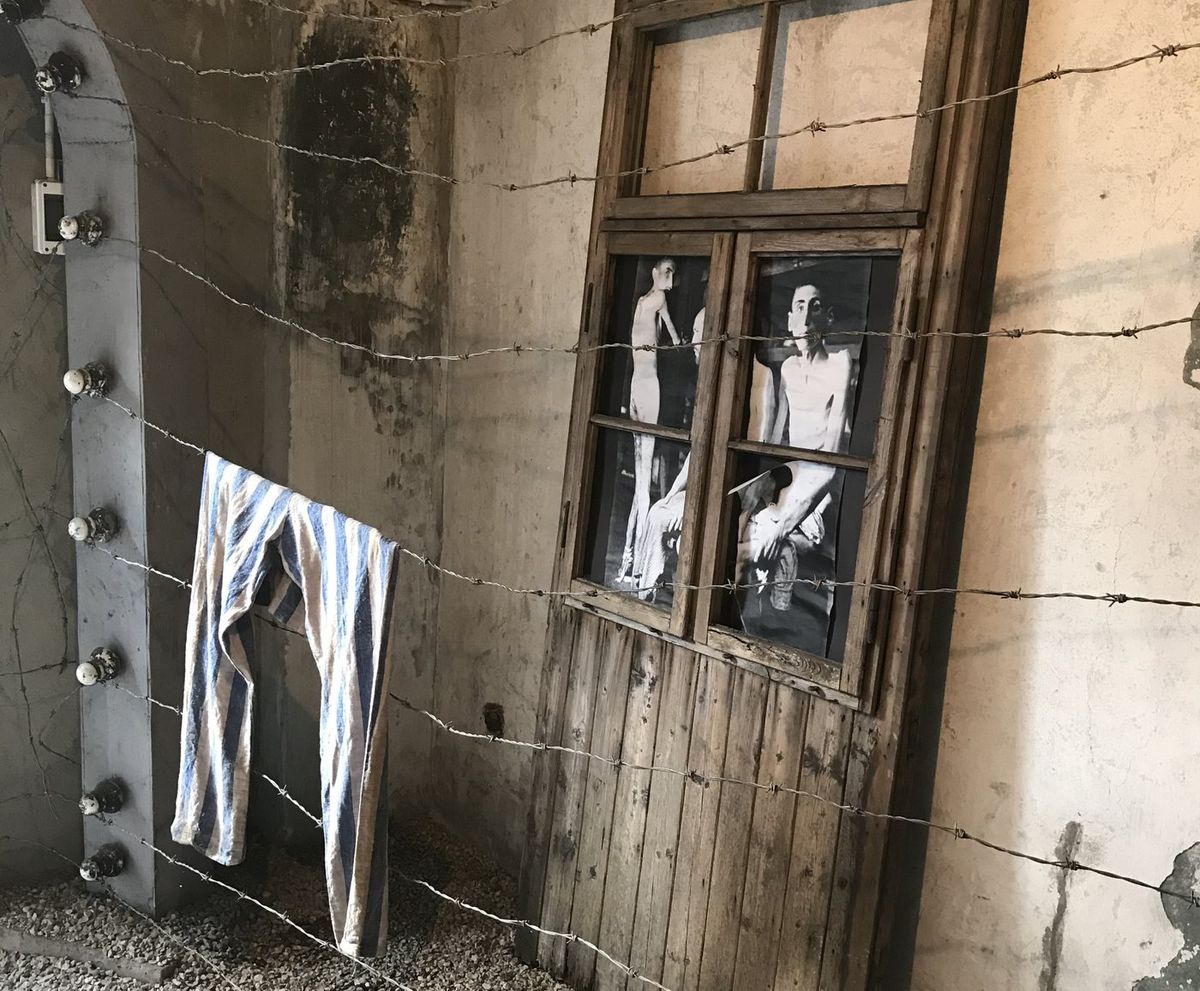
An exhibition in one of the buildings of the former mine at Jawiszowice, devoted to the camp built for the IG Farben concern at the construction of the synthetic rubber plant. Monowitz is the industrial face of Auschwitz. What decided everything here was arithmetic: what a worker costs, how long he lasts and when replacing him comes cheaper than feeding him.
Four hundred metres in a straight line from the Arbeit macht frei gate, SS men drank beer, watched films and organised boxing matches. Himmler gave a speech in this building. Beside it, on the tracks that carried the first transports to Auschwitz, stands a historic freight wagon.
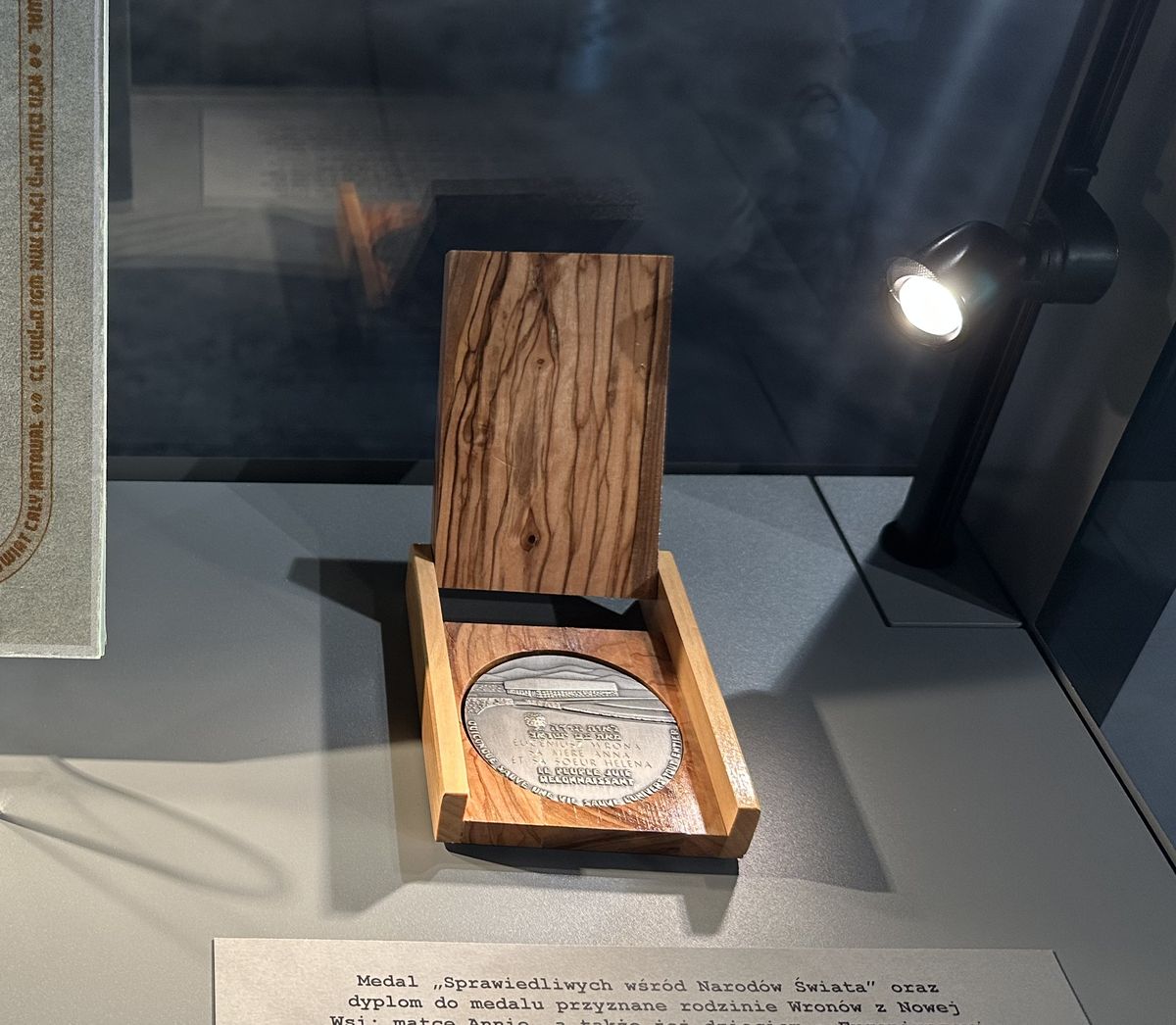
A public museum devoted to what the people of the Oświęcim region did while the camp operated next to them: the underground, smuggling food and medicine, carrying messages out, helping those who escaped. Almost two thousand names of people who took that risk, with the lives of whole families at stake, are documented here. The collection holds the Righteous Among the Nations medal of the Wrona family from Nowa Wies. Visited with an audio guide only, in five languages.
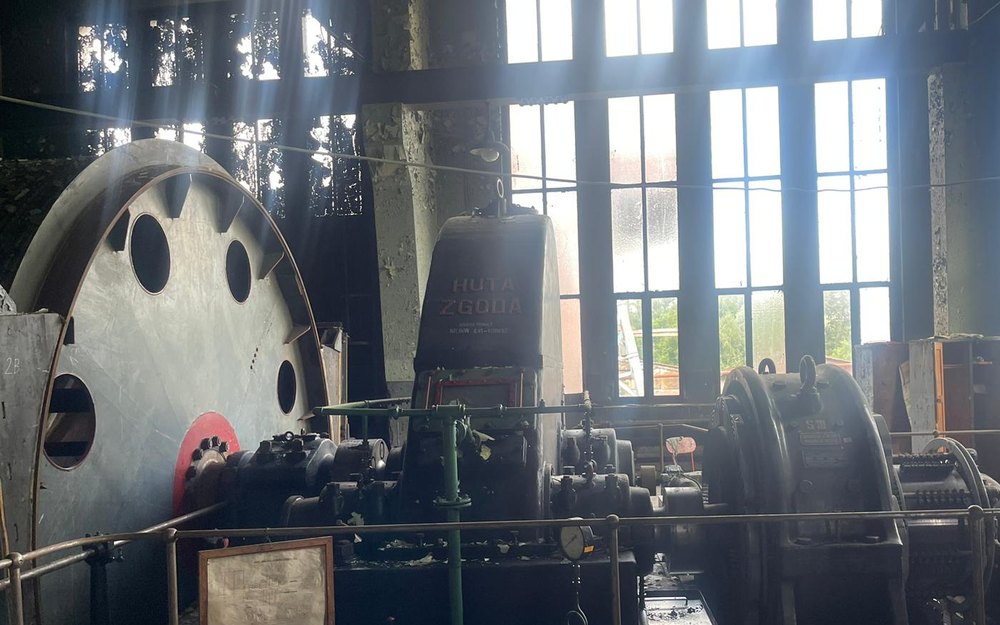
The Brzeszcze-Jawiszowice mine opened in 1903 and, after Poland regained independence, it was the only state owned coal mine in the Second Polish Republic. In August 1942 the Germans set up a subcamp beside it and for the first time in the history of the German concentration camps sent prisoners underground, to the coalface, to mine coal. Seven structures survive, among them two pre-war headframes and winding engines from the nineteen thirties. Forty years later, on 15 December 1981, the crew began a strike here against martial law and one thousand two hundred and sixty seven miners stayed underground for two days and two nights. The same shaft, the same cage.
The surviving camp bathhouse, with a small exhibition, some five hundred metres from the mine. From here you step onto the grounds of the Jawischowitz subcamp, one of the largest in the entire system. At its peak two and a half thousand people were held here. Today the site is a municipal park whose shape and boundaries still follow the outline of the camp.
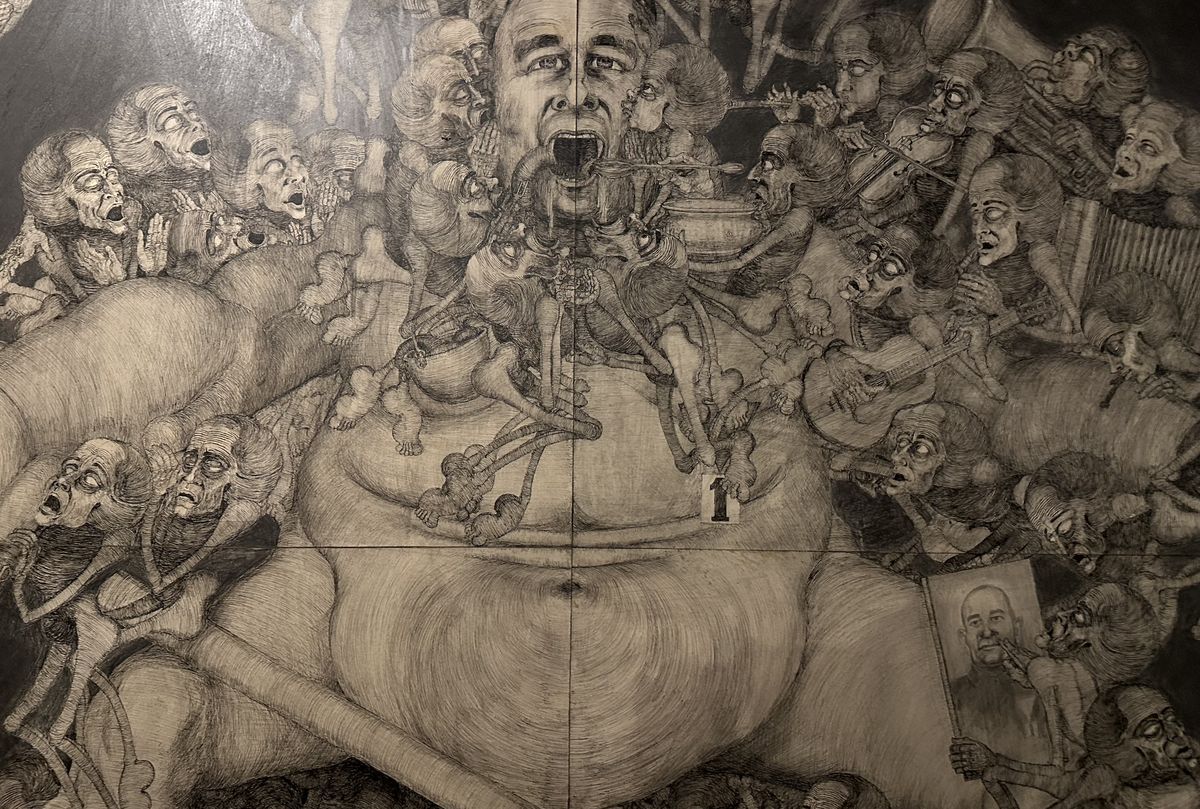
An exhibition of drawings by Marian Kolodziej, a prisoner of the first transport to Auschwitz, number 432. For half a century he did not say a word about the camp. He began to draw only after a stroke, in the early nineteen nineties, and did not stop until his death. What grew out of it is a labyrinth of several hundred large format panels that the visitor does not so much walk through as squeeze through.
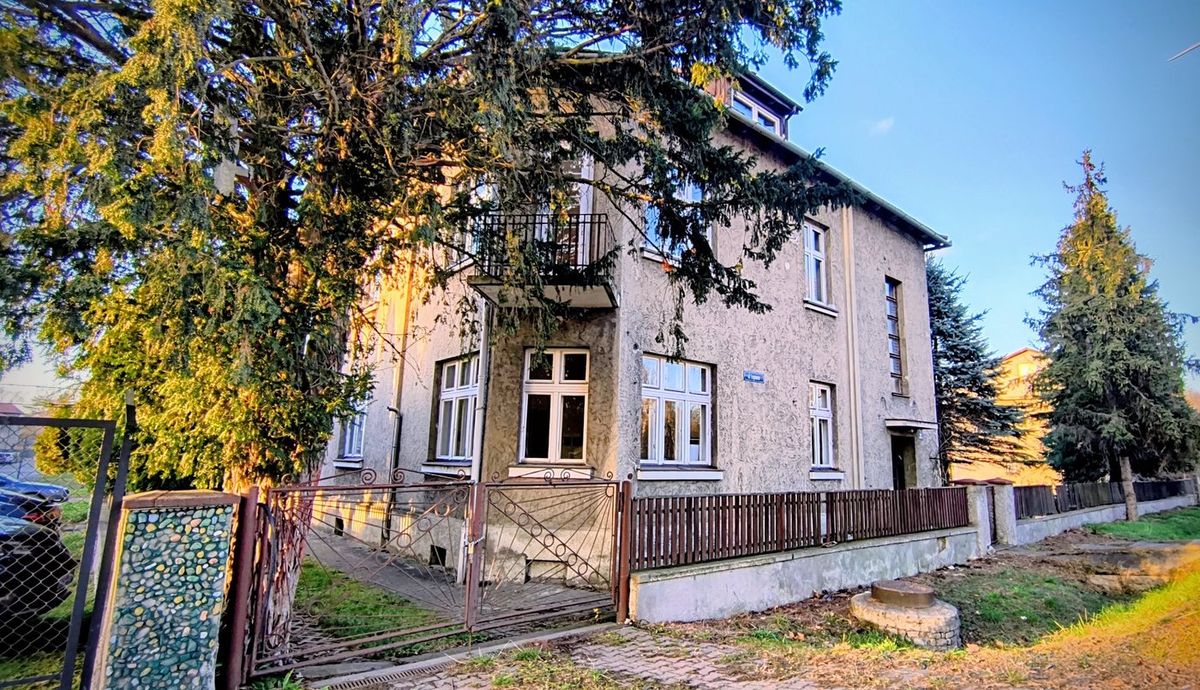
The house where Rudolf Hoss lived with his wife and five children throughout his service at Auschwitz. Behind the garden wall, a few dozen metres from the bedroom windows, the camp began. This is the house and the garden the world saw in The Zone of Interest. After the war Hoss hid under the name Franz Lang, was recognised, tried and hanged in Oświęcim, a few hundred metres from his own garden gate. We stand in front of the house, an arm's length from the fence, and that is where we end the story of the Zone of Interest.
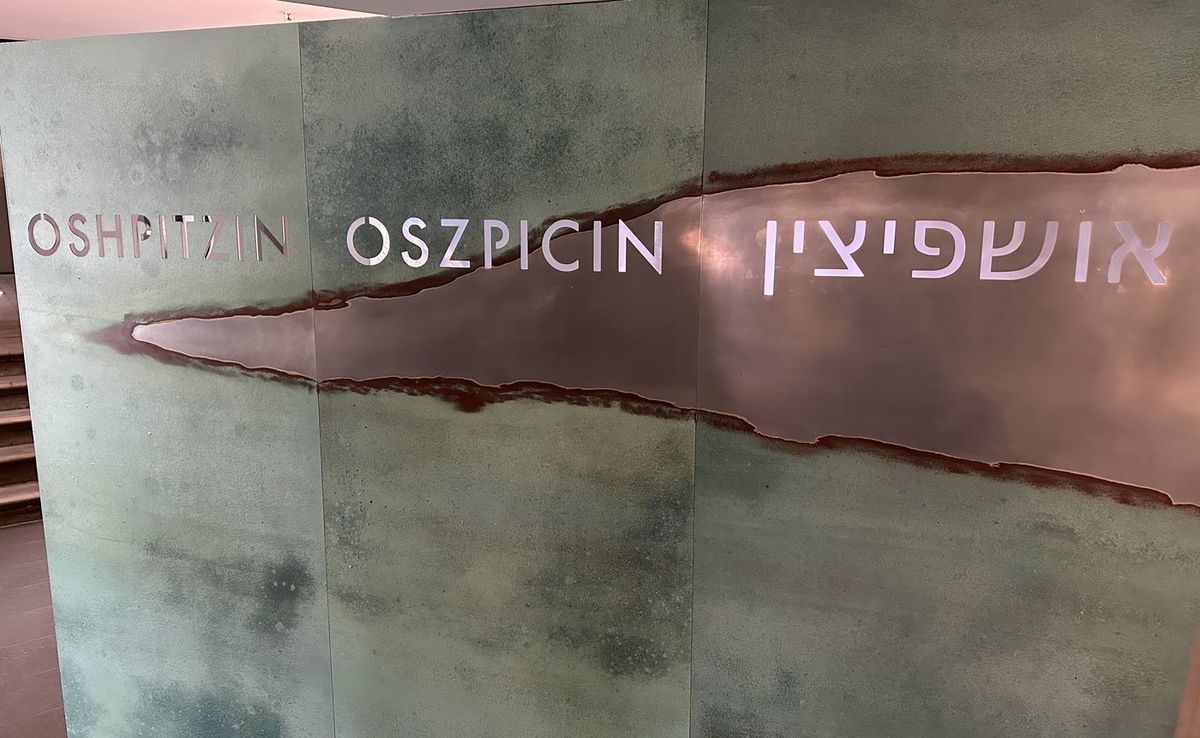
Oshpitzin is the Yiddish name of Oświęcim. Before the war Jews made up more than half the population of the town, and their presence here went back four hundred years. After the war some survivors came back and tried to rebuild Jewish life here. Over the following years most of them left. The museum and the surviving synagogue tell the story of a town that existed long before the camp and that the camp did not replace. The last Jewish resident of Oświęcim died in 2000.
Three versions of one day
BProgrammes
Column B · 2
We run three programmes and they are the same for everyone who books them. They differ in length and in where the emphasis falls. Each is led by our own guide, in the language of the group, from the first stop to the last. The choice of sites and the way the story is told can be adjusted to a particular group.
Any of them can be extended with a workshop run by the educators of the Remembrance Museum of Land of Oświęcim Residents, in the museum rooms and in the permanent exhibition. See the fourteen topics →
The programme is the same for everyone who travels with us. What follows depends on who books it and where they come from.
The largest group of our clients
Tour operators and organisers
You bring ready made groups to Krakow and Oświęcim and you are looking for a day your client will not find in the standard offer. We collect the group at the hotel, fit in with your schedule and work on net rates that leave room for your margin.
You travel as a whole group and settle for the whole day, not for tickets. We match the shape of the day to the age of the participants and to what the trip is built around. We send the quotation within one working day.
You have no group, only yourselves. You join a departure on a scheduled date, with transport from the centre of Krakow and back to the same place. Book online, confirmed at once.
How the Auschwitz system spread. Dates of establishment, employers and prisoner numbers after the project Re-Finding the Sub Camps of Auschwitz (Tiergarten4Association). Two subcamps lie outside the frame: Brünn in Brno and 2 SS Bauzug, the SS construction train in Stuttgart and Karlsruhe; both are noted along the bottom edge of the map. The animation shows all 45 camps in turn, in the order they were created.
We do not work alone. We run the programmes together with the institutions that care for
these places, open them to visitors and keep the memory of the victims alive. It is thanks to their work that some
of the sites on our route survived at all and can be entered today.